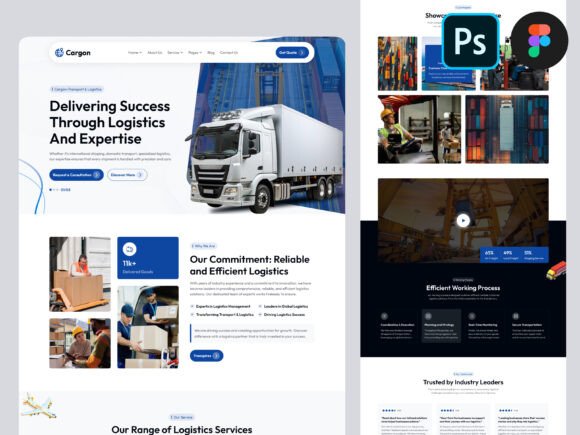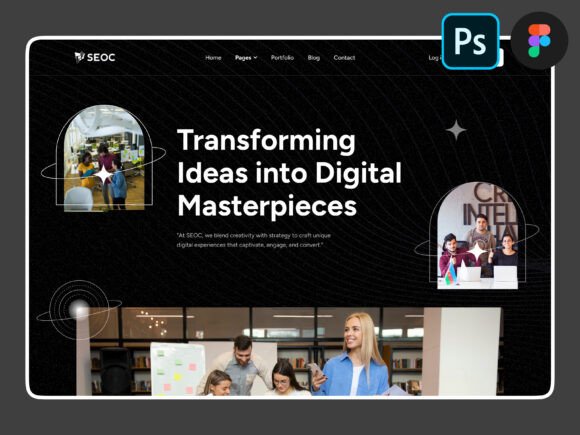
Creative Agency Landing Page PSD Figma: A Practical Evaluation
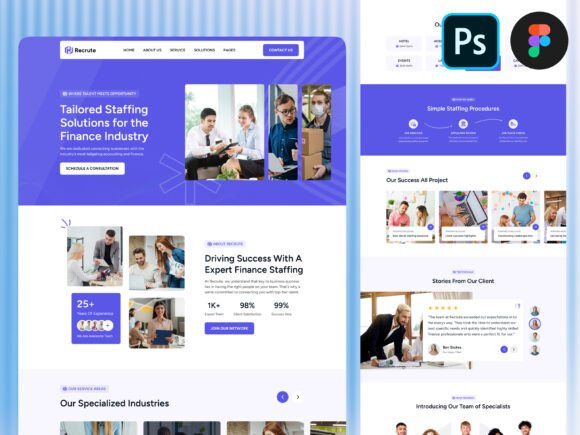
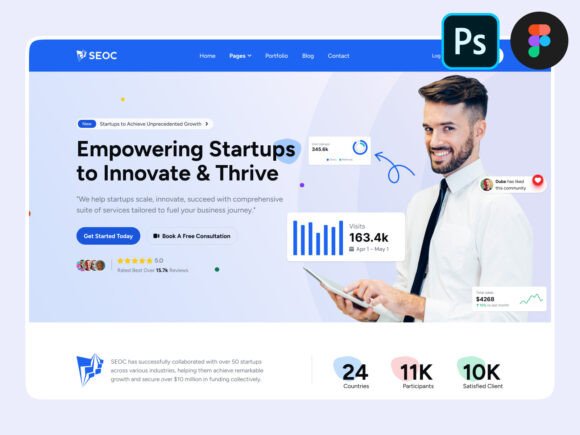
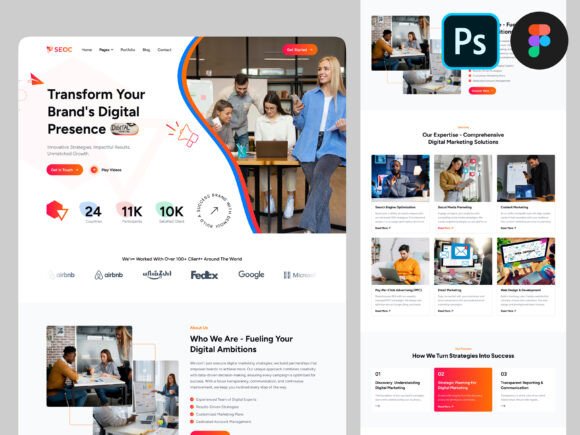
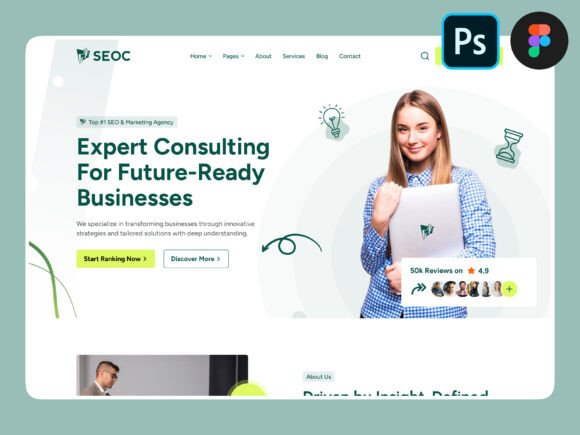
In the competitive landscape of digital design, the tools available to professionals often dictate the speed and quality of their output. The Creative Agency Landing Page PSD Figma template represents a specific class of resource designed to bridge the gap between conceptual wireframing and high-fidelity presentation. Unlike generic templates that force a one-size-fits-all approach, this asset is engineered with predefined web elements that allow designers to construct a functional site layout without starting from a blank canvas. For business consultants, legal professionals, financial advisors, and creative directors alike, the ability to rapidly prototype a modern interface is not merely a convenience; it is a strategic necessity.
The Core Value of Dual-Format Design Assets
The primary distinction of this resource lies in its delivery format. By providing both a Figma file and a PSD (Photoshop Document), the template accommodates diverse workflows within an agency or freelance environment. Figma has become the industry standard for collaborative interface design, offering real-time updates and component-based architecture. Conversely, Photoshop remains deeply embedded in many traditional agencies and print-to-web pipelines. Having access to both ensures that the design can be handed off to developers familiar with either ecosystem.
This dual availability addresses a common friction point in project management: compatibility. When a team member prefers vector manipulation in Illustrator or raster editing in Photoshop, while another relies on cloud-based prototyping in Figma, this template eliminates the need for costly and time-consuming file conversion. The 100% customizable nature of the files means that stakeholders can iterate on the design regardless of their preferred software suite, maintaining consistency across the board.
Structural Integrity and Grid Systems
A well-constructed landing page relies heavily on underlying structure. This template is built upon the Bootstrap Grid System, specifically utilizing a 1170px grid foundation. This is significant because Bootstrap remains one of the most widely used front-end frameworks globally. Developers who receive these designs will find that the spacing, column widths, and alignment logic mirror the code they are likely to write. This reduces the "design-to-code" translation error, where a beautiful mockup fails to translate into a responsive website.
The full-width capability of 1600px ensures that the design looks crisp on high-resolution displays, which is increasingly common among desktop users. Furthermore, the emphasis on responsiveness guarantees that the layout adapts seamlessly to tablets and mobile devices. In an era where mobile traffic often surpasses desktop usage, a template that ignores mobile-first principles is obsolete. Here, the grid system ensures that content reflows logically, preserving readability and user experience across all screen sizes.
Usability and Organization Standards
One of the most critical factors in evaluating a design template is the organization of its internal layers. A messy file structure can turn a simple edit into a hours-long ordeal. This Creative Agency Landing Page PSD Figma template adheres to best practices by ensuring that all layers are named, grouped, and organized properly. This level of discipline is essential for professional environments where multiple designers may touch the same file.
The inclusion of Figma Styles and Components further enhances usability. Components allow for global changes; if a button style needs to be updated across the entire landing page, changing the master component updates every instance instantly. Similarly, defined styles for typography and color ensure visual consistency. For business sectors such as law firms or financial advisory services, where brand consistency and trust are paramount, this structural reliability prevents accidental deviations from the brand identity.
Versatility Across Professional Sectors
While the title suggests a focus on creative agencies, the underlying architecture is robust enough to support a wide array of professional services. The clean, minimal modern design avoids overly niche aesthetics that might alienate other industries. This makes it highly adaptable for:
- Business Consulting Services: The structured layout supports complex service offerings and case studies effectively.
- Legal Professionals: The professional typography and balanced whitespace convey authority and trustworthiness.
- Advertising Consultants: The creative illustrations and unique artboards provide a platform to showcase portfolio work.
- Financial Advisors and Investment Consultants: The clear hierarchy helps present data and investment strategies without clutter.
- Insurance Brokers: The straightforward navigation aids in explaining policy details clearly.
- Life Coaches and Wellness Coaches: The modern UI can be easily softened with imagery to reflect a personal, approachable brand.
This versatility stems from the template's reliance on universal design principles rather than trend-specific gimmicks. The use of FREE fonts from Google Fonts also ensures that the typography is accessible, performant, and legally safe for commercial use, removing licensing hurdles for small business owners and freelancers.
Visual Quality and Customization Depth
The aesthetic appeal of the template is driven by its unique design and the inclusion of amazing vector illustrations and icons. Vector graphics are scalable without loss of quality, which is crucial for the fully vector customizable promise of the file. Whether a client needs to resize a hero image for a billboard or shrink an icon for a mobile app notification, the assets remain sharp.
The "01 Unique Artboards" mentioned in the specifications suggest a focused, single-page experience optimized for conversion. In the context of a landing page, fewer distractions often lead to higher engagement. The design allows users to highlight their core value proposition immediately. However, the flexibility extends beyond the initial look. Because the files are well-organized, adding new sections—such as a testimonial carousel or a detailed pricing table—is manageable without breaking the existing layout.
Real-World Performance and Limitations
When deploying this template in a real-world scenario, the workflow becomes significantly faster. Instead of spending days aligning grids and setting up basic components, a designer can jump straight into branding and content integration. This acceleration is particularly valuable for startups or consultants launching a new service line who need a market-ready presence quickly.
However, potential users should be aware of certain limitations. While the template provides a strong foundation, it is not a finished product. It requires customization to fit specific brand guidelines. The "predefined web elements" are starting points, not final solutions. Additionally, while the grid is based on Bootstrap, the developer must still write the actual HTML/CSS code unless a companion coded version is provided. The template serves as the blueprint, not the building itself.
Furthermore, the reliance on specific Google Fonts means that if a brand mandates a proprietary font, the designer will need to import and configure those manually. This is a minor hurdle but worth noting for strict corporate environments. The "Minimal Modern Design" might also feel too sparse for brands that require dense information density, though the grid system allows for expansion.
Who Benefits Most?
The Creative Agency Landing Page PSD Figma is ideally suited for several specific groups:
- Freelance Designers: Those who need to deliver high-quality proposals quickly will find the pre-built components invaluable for meeting deadlines.
- Small Business Owners: Entrepreneurs in consulting or coaching who lack a dedicated design team can use this to create a professional-looking brief for a developer.
- Marketing Agencies: Teams managing multiple clients can use this as a base template, customizing it slightly for each campaign to maintain efficiency.
- Developers: Front-end developers who prefer working from a structured Figma or PSD file will appreciate the organized layers and Bootstrap alignment.
For serious hobbyists and educators, this template offers a chance to study professional file organization and component usage, serving as an educational tool for understanding industry standards.
Long-Term Value and Strategic Fit
Investing in a high-quality template like this yields long-term value through repeatability and scalability. Once a team learns the structure of this file, they can replicate the process for future projects, creating a consistent library of assets. The separation of concerns—where design elements are distinct from layout structures—allows for easier maintenance over time. As business needs evolve, updating the content or swapping out illustrations does not require rebuilding the entire page.
In conclusion, the Creative Agency Landing Page PSD Figma stands out as a pragmatic solution for professionals seeking to balance speed with quality. Its adherence to web development best practices, combined with flexible customization options and dual-format support, makes it a reliable asset for a wide range of industries. While it requires some technical know-how to fully leverage, the return on investment in terms of time saved and design consistency is substantial. For anyone looking to establish a credible online presence in the consulting, legal, or creative sectors, this template provides a solid, modern foundation upon which to build.