Designing Trust: How a Modern Divorce Law Firm Landing Page Transforms Client Acquisition
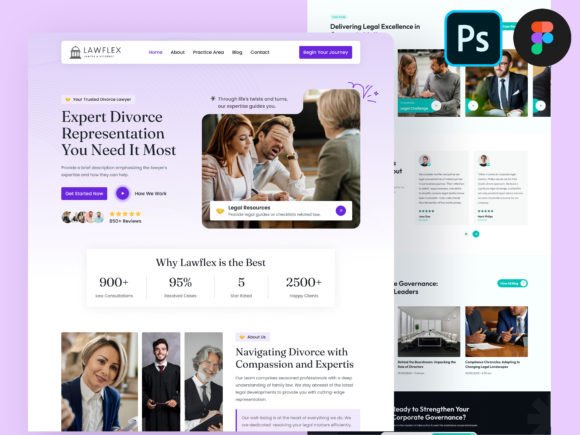
In the high-stakes world of legal services, particularly within family law, the first interaction between a potential client and a firm often happens before a single word is spoken. It occurs on a screen. For individuals navigating the emotional turbulence of separation or divorce, finding the right legal representation is not just a business transaction; it is a search for stability, understanding, and advocacy. This is where the design and functionality of a Divorce Law Firm Landing Page become critical. A well-crafted digital presence does more than display contact information; it communicates empathy, competence, and professionalism instantly.
Modern web design has evolved beyond simple static pages. Today, firms utilize sophisticated tools like Figma to create highly customizable, responsive templates that serve as the foundation for their online identity. Whether you are a seasoned attorney looking to rebrand or a new practice establishing its footprint, understanding the mechanics of these landing page designs is essential for success in the digital age.
The Strategic Importance of a Specialized Legal Landing Page
Many businesses operate under the misconception that a general website is sufficient for all marketing needs. However, in the realm of legal consulting, specificity is key. A dedicated landing page designed specifically for divorce law addresses the unique psychological state of the visitor. Unlike a corporate business consulting site or a financial advisor's portfolio, a divorce law page must balance authoritative legal expertise with human-centric warmth.
The purpose of such a page is twofold: to educate the visitor about the process and to convert them into a consultation request. When a user lands on this page, they are often overwhelmed. They need clarity. A modern UI (User Interface) template built on principles of minimalism and clarity helps reduce cognitive load. By removing clutter and focusing on clear calls to action, the design guides the user naturally toward seeking help. This is not merely aesthetic; it is a strategic component of client acquisition.
Bridging the Gap Between Design and Legal Practice
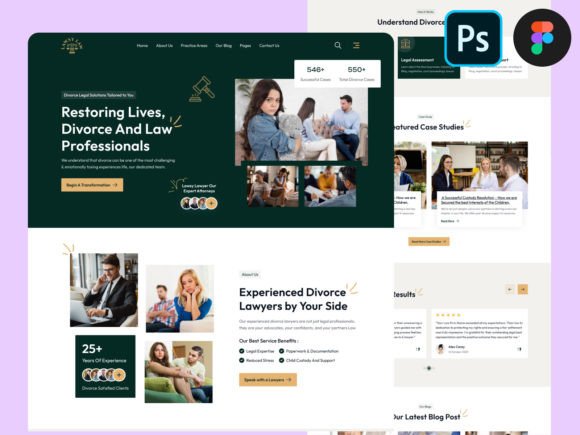
The intersection of creative design and legal practice is where modern business thrives. A high-quality Figma template provides a blueprint that translates complex legal services into an accessible visual language. These templates often include predefined web elements such as hero sections, testimonial carousels, service breakdowns, and attorney profiles. Each element serves a specific function in building trust.
- Hero Sections: Immediately communicate the firm's value proposition with compelling imagery and concise copy.
- Trust Signals: Displaying awards, bar associations, and client testimonials reduces anxiety for the visitor.
- Service Clarity: Clearly outlining areas of expertise, from custody battles to asset division, ensures the right clients find the right help.
This approach mirrors the strategies used by other professional sectors, such as insurance brokers, investment consultants, and life coaches. Just as a wellness coach uses a calming interface to attract clients seeking balance, a divorce lawyer uses a structured, reassuring design to attract those seeking resolution.
Understanding the Technology Behind the Design
To build a website that performs as well as it looks, one must understand the underlying technology. The most effective landing page templates today are built using industry-standard frameworks. Many modern designs rely on the Bootstrap Grid System or similar grid structures like the 1170px layout. These systems ensure that the website maintains structural integrity across various devices.
Why is this technical detail important for a law firm? Because accessibility is a legal and ethical imperative. A significant portion of potential clients will access your site via mobile devices—smartphones and tablets—often while searching discreetly during breaks at work or late at night. If your site is not fully responsive, you are losing valuable opportunities. A template based on a robust grid system guarantees that text remains readable, buttons remain clickable, and images scale appropriately on screens ranging from small phones to large desktop monitors.
The Role of Figma in Customization
Figma has revolutionized how designers and developers collaborate. Unlike older design tools that produced static images, Figma allows for the creation of living components. When you acquire a premium Divorce Law Firm Landing Page UI template, you are receiving a file that is "fully vector customizable." This means every shape, icon, and illustration can be modified without losing quality.
For a business owner, this level of customization is invaluable. You might want to change the color palette to match your firm's branding, swap out stock photography for real images of your team, or adjust the typography to better reflect your personality. With well-organized layers and named groups, even someone with limited design experience can navigate the file structure easily. The use of Google Fonts further simplifies this process, ensuring that the text you see in the design matches what appears on the final website.
Furthermore, the inclusion of vector icons and creative illustrations adds a layer of sophistication. In the legal field, which can sometimes feel cold or intimidating, unique artwork can soften the tone. An illustration of a balanced scale or a supportive handshake can convey complex concepts quickly and effectively, bridging the gap between legal jargon and human understanding.
Expanding the Scope: Beyond Divorce Law
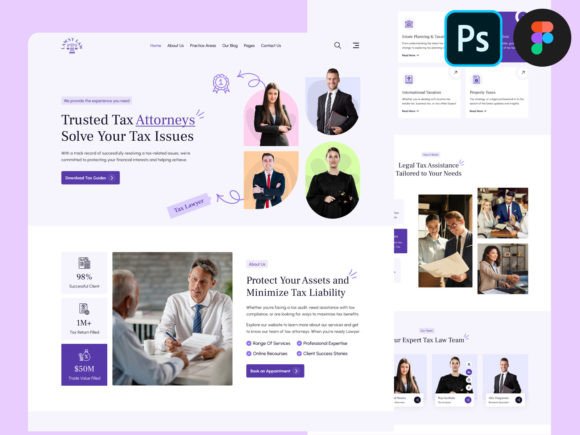
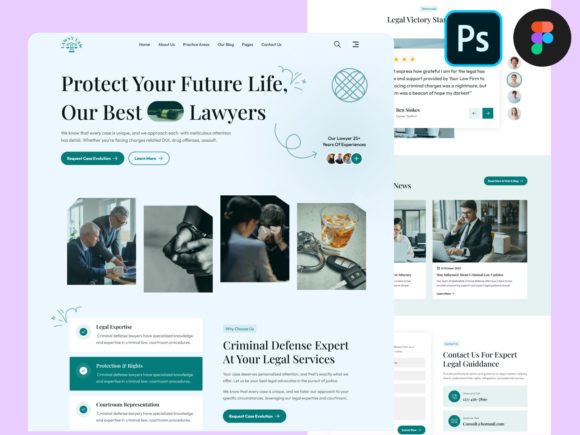
While the focus here is on divorce law, the principles behind these high-converting landing pages apply broadly across the professional services sector. The same template architecture used for a family law firm can be adapted for business consulting services, advertising consulting, or financial advisors.
Consider the needs of an investment consultant. Like a divorce client, their audience is likely stressed and looking for security. A clean, modern UI that highlights past performance and client success stories builds the necessary credibility. Similarly, a life coach or wellness coach benefits from a design that emphasizes personal growth and transformation. The versatility of these templates lies in their ability to adapt to different narratives while maintaining a high standard of visual quality.
- Adaptability: Change the imagery and copy to fit the niche, but keep the structural logic.
- Consistency: Use the same style guide (colors, fonts) across all service pages to build brand recognition.
- Scalability: As your firm grows, adding new service pages becomes easier when you have a master template.
Common Misunderstandings About Web Design Templates
A common assumption among business owners is that using a template makes a website look generic. This is a misunderstanding of what a professional template offers. A low-quality, free template might indeed look cookie-cutter. However, a premium, fully customizable Figma file provides a professional foundation that is far superior to starting from scratch.
Starting from zero often leads to design inconsistencies and layout errors. Experienced designers know that good design is about solving problems, not just making things look pretty. These templates are created by professionals who understand user behavior, conversion psychology, and best practices in web development. By leveraging their expertise, you ensure that your site is built on a solid framework.
Another misconception is that once the design is done, the job is finished. In reality, the design file is just the beginning. The transition from Figma to a live website requires careful implementation. However, because these files are organized with "Easy to Find Artboards, Folders, Layers, Components," the handoff to developers is seamless. This organization saves time and money in the long run, allowing the firm to launch faster and start acquiring clients sooner.
Practical Relevance in Modern Business
In today's digital economy, your website is your 24/7 receptionist. For a divorce law firm, this receptionist must be impeccable. Clients judge a book by its cover, and in the legal profession, the "cover" is your digital presence. A modern, responsive design signals that the firm is current, tech-savvy, and attentive to detail. Conversely, an outdated or broken site suggests negligence—a trait no client wants in their lawyer.
The integration of best practice web development standards ensures that the site loads quickly, ranks well on search engines (SEO), and provides a smooth user experience. Features like full-width layouts (1600px) allow for immersive storytelling, while the modular nature of the design allows for easy updates as laws change or the firm expands its services.
Moreover, the availability of both Figma and PSD files offers flexibility. While Figma is the industry leader for collaborative design, some teams may still prefer Photoshop for certain workflows. Having both formats ensures that the design assets are accessible regardless of the preferred toolset.
Conclusion: Investing in Your Digital Future
Ultimately, a Divorce Law Firm Landing Page is more than a collection of pixels; it is a strategic asset. It represents the firm's commitment to excellence and its dedication to serving clients effectively. By utilizing modern design tools and customizable templates, legal professionals can create a digital environment that fosters trust and encourages engagement.
Whether you are a solo practitioner or part of a large firm, the investment in a high-quality, responsive, and visually appealing website pays dividends. It aligns your practice with the expectations of modern consumers and positions you as a leader in your field. As the legal landscape continues to evolve, so too must the ways in which we present our services. Embracing these design innovations is not just about keeping up with trends; it is about providing the best possible service to those who need it most.
By understanding the nuances of UI design, the importance of responsive grids, and the power of customization, you can transform a simple webpage into a powerful engine for growth and connection. In a world where first impressions are digital, ensuring yours is perfect is the most important step you can take.