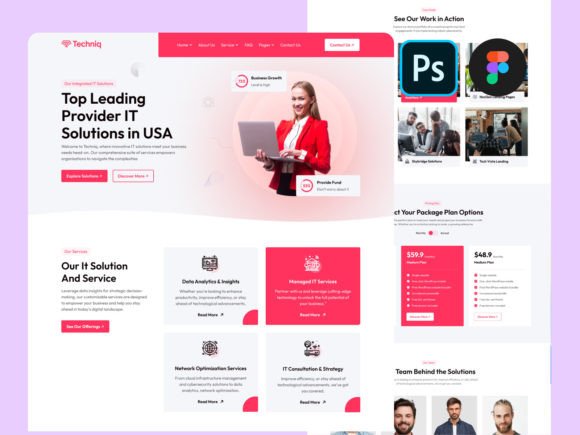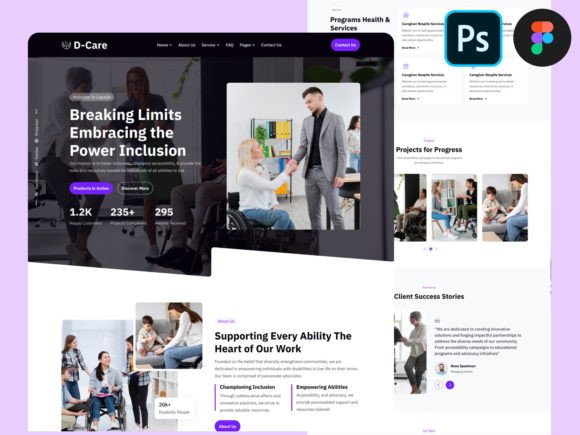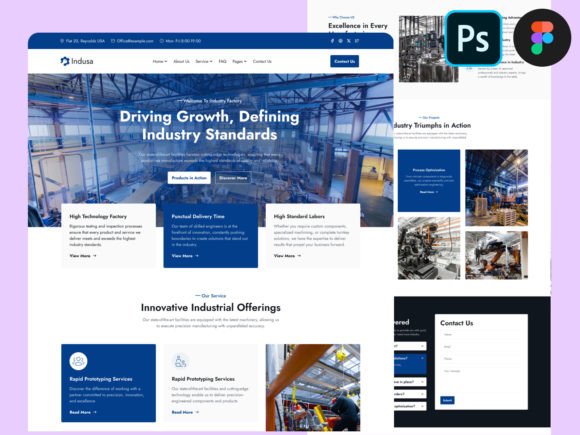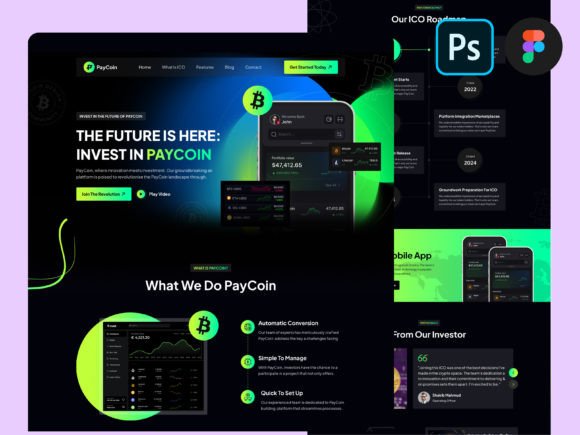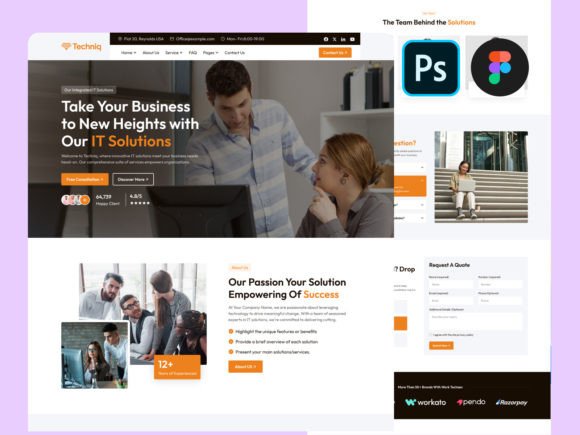
It Solution Website UI PSD Figma Design: A Practical Guide for Professional Web Development
In the fast-paced world of digital business, the gap between a concept and a live website is often bridged by high-quality design assets. For professionals ranging from freelance developers to agency teams, the It Solution Website UI PSD Figma Design represents more than just a visual template; it is a structured starting point that accelerates the entire development lifecycle. Whether you are building a platform for business consulting, legal services, or financial advising, having a robust, pre-designed interface allows you to focus on customization and functionality rather than starting from a blank canvas.
This resource is specifically engineered to support a wide array of service-based industries. From advertising consultants and insurance brokers to life coaches and investment advisors, the underlying structure provides a modern aesthetic that builds immediate trust with potential clients. By integrating this design into your workflow, you ensure that the final product adheres to current web standards while remaining fully adaptable to specific brand requirements.
Understanding the Role of Pre-Built UI Kits in Your Workflow
The It Solution Website UI PSD Figma Design fits into the broader process of web creation as a strategic asset used primarily during the prototyping and handoff phases. In a typical project timeline, the initial stages involve gathering requirements and defining the scope. Once the core features are identified, selecting a template that aligns with the industry vertical—such as a clean, professional layout for lawyers or a vibrant, engaging design for wellness coaches—becomes critical.
Using a template based on the Bootstrap Grid System or a 1170px grid structure ensures that the foundation is solid before any coding begins. This approach reduces the risk of structural errors and inconsistencies that often plague custom-built sites created without a reference framework. The design serves as a blueprint, allowing stakeholders to visualize the end product early in the process. This visualization capability is essential for decision-making, enabling clients to approve layouts and color schemes before significant development resources are committed.
Integration with Modern Design Tools and Systems
One of the most significant advantages of this resource is its dual-format availability, providing both a Figma file and a PSD file. This flexibility allows teams to work within their preferred environments while maintaining consistency across the board. For designers who rely on Figma's collaborative features, the file includes well-organized layers, named groups, and components that streamline the editing process. The use of Figma Styles and Components means that global changes, such as updating a primary color or adjusting typography, can be applied instantly across all artboards.
For teams that still utilize Adobe Photoshop, the included PSD file offers a familiar workspace with vector-based elements that remain editable. The inclusion of vector icons and illustrations ensures that scaling the design for different screen sizes does not result in pixelation or loss of quality. This compatibility extends to the development phase as well. Since the design is based on best practices like the Bootstrap Grid System, developers can translate the visual layout into code with greater efficiency. The predefined web elements act as a direct guide for implementing responsive behaviors, ensuring the site looks awesome on tablets and mobile devices.
Optimizing for Responsive and Mobile-First Experiences
Modern web users expect seamless experiences across all devices. The It Solution Website UI PSD Figma Design addresses this need through a full-width 1600px layout that is inherently responsive. When planning a website for a financial advisor or an investment consultant, the ability to present complex data clearly on a small smartphone screen is paramount. The template's structure anticipates these challenges by organizing content into logical sections that stack naturally on smaller viewports.
During the implementation phase, designers can leverage the unique artboards provided to test various breakpoints. This proactive testing helps identify potential usability issues before the code is written. For instance, navigation menus designed for desktop must transform effectively into hamburger menus for mobile. The template's organization makes it easy to locate these specific components and adjust them to fit the mobile-first strategy required by modern search engine optimization (SEO) algorithms.
Customization Strategies for Diverse Business Sectors
While the template provides a cohesive look, its true value lies in its customizability. A design intended for a law firm will have different messaging and imagery needs compared to one for a life coach. The "Easy and 100% customizable" nature of the files allows for deep personalization without compromising the original design integrity.
Business Consulting and Financial Services: For sectors like business consulting, financial advisors, and insurance brokers, trust and professionalism are key. The minimal modern design of this template provides a clean backdrop that allows text-heavy content and data visualizations to shine. Users can easily swap out the default vector illustrations with charts or industry-specific graphics to reinforce authority.
Creative and Coaching Industries: Conversely, for advertising consultants, wellness coaches, and life coaches, the design can be adapted to be more dynamic. The creative and unique design elements serve as a base that can be enhanced with bold colors and emotive imagery. The Google Fonts integration allows for quick typography changes to match the brand voice, whether it needs to be authoritative or approachable.
Practical Implementation Tips for Efficiency
To get the most out of the It Solution Website UI PSD Figma Design, it is essential to follow a structured implementation plan. Start by auditing the existing layers and folders. Because all layers have been named and grouped properly, you should spend time understanding the hierarchy before making changes. This prevents accidental deletions or misalignments later in the process.
Utilize the component system to maintain consistency. If you change a button style in one section, ensure the same component is updated globally. This practice saves hours of manual editing and ensures a uniform user experience. Additionally, take advantage of the free fonts from Google Fonts included in the package. These are optimized for web performance, which contributes to faster load times—a critical factor for SEO and user retention.
When handing off the design to developers, provide clear documentation regarding the grid system used. Whether you choose to build on Bootstrap or the Grid 1170px system, communicating the spacing and alignment rules ensures that the final coded product matches the design pixel-perfectly. The well-organized layers make this handoff smoother, reducing back-and-forth communication and speeding up the deployment timeline.
Long-Term Value and Scalability
Investing in a high-quality template like this one offers long-term benefits beyond the initial launch. As a business grows, its website often needs to evolve. The modular nature of the It Solution Website UI PSD Figma Design makes it easier to add new pages or sections without redesigning the entire site. The consistent style guide embedded in the Figma styles ensures that new additions blend seamlessly with existing content.
Furthermore, the focus on quality control during the design phase translates to a more stable website. By using a template that follows web development best practices, you reduce the likelihood of technical debt accumulating over time. This stability is crucial for businesses that rely on their website for lead generation and client acquisition. Whether you are a freelancer managing multiple clients or a small business owner building your own brand, having a reliable, scalable design system in place is a strategic advantage.
In conclusion, the It Solution Website UI PSD Figma Design is a comprehensive tool that bridges the gap between design and development. It supports a wide range of professional services, from legal and financial sectors to coaching and advertising. By integrating this resource into your workflow, you gain access to a modern, customizable, and responsive framework that accelerates project delivery and enhances the overall quality of your digital presence. The combination of Figma and PSD files, coupled with a strong adherence to grid systems and organized layer management, makes it an invaluable asset for anyone looking to build a professional website efficiently.