Personal Injury Law Website Ui Figma
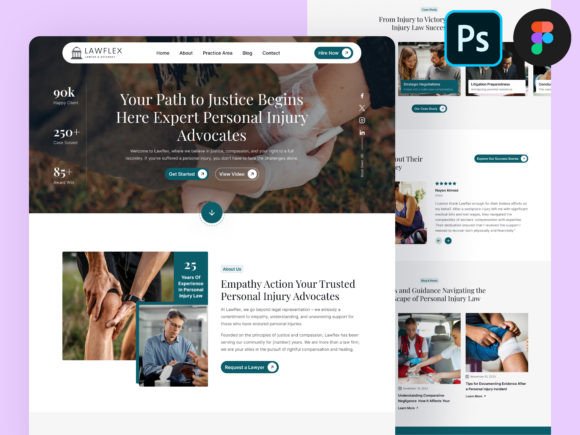
Building a digital presence for a legal practice requires more than just placing text on a screen; it demands a design that communicates trust, authority, and clarity. The Personal Injury Law Website Ui Figma template addresses this need by offering a comprehensive visual framework specifically tailored for the legal sector. This resource is not merely a collection of graphics but a structured system designed to streamline the creation of professional landing pages. Whether you are a solo practitioner looking to establish an online footprint or a marketing agency managing multiple client accounts, having a robust starting point can significantly reduce development time while ensuring high aesthetic standards.
Understanding the Design Framework
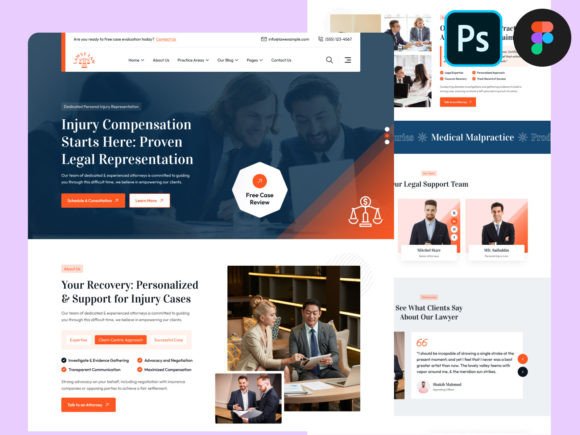
At its core, this template is a set of vector-based artboards created within the Figma ecosystem. It provides a modern user interface (UI) layout that includes predefined web elements essential for a law firm's homepage. These elements often feature sections for attorney profiles, case results, client testimonials, and contact forms, all arranged to guide a visitor toward taking action. The design relies on a Bootstrap Grid System with a full-width 1600px canvas, ensuring that the layout remains responsive across various devices. This technical foundation means the site will look polished on desktop monitors, tablets, and mobile phones without requiring extensive manual adjustments.
The inclusion of well-organized layers, named groups, and components makes the file highly customizable. Unlike static image files, these designs are built with editable vectors, allowing users to change colors, typography, and iconography to match their specific brand identity. The use of free Google Fonts ensures accessibility and consistency, while the integration of creative vector illustrations adds a human touch to what can often be a dry subject matter. For those familiar with web development, the structure aligns with best practices, making the transition from design to code smoother.
Why Different Audiences Value This Resource
The utility of a Personal Injury Law Website Ui Figma extends beyond just lawyers. Its value proposition shifts depending on who is using it and what goals they aim to achieve. For a business owner in the legal field, the primary concern is often credibility and conversion. A professionally designed landing page can differentiate a firm from competitors who rely on outdated or generic templates. The unique design included in this package helps convey a sense of competence before a potential client even reads the first sentence of the content.
For advertising consultants and financial advisors working with legal clients, this template serves as a strategic asset. These professionals often need to present mockups quickly to secure buy-in from stakeholders. Having a ready-made, high-fidelity design allows them to demonstrate how a new website could look and function, facilitating faster decision-making processes. Similarly, insurance brokers and investment consultants may find the structural logic of the template useful for their own niche sites, adapting the clean, authoritative layout to fit their service offerings.
Perspectives for Beginners and Hobbyists
Beginners entering the world of web design or small business owners attempting to manage their own digital assets will find the organized nature of this file particularly helpful. The "Easy to Find Artboards, Folders, Layers, Components" feature acts as a learning tool. By exploring how a professional designer has grouped elements and applied styles, novices can learn industry-standard workflows. Instead of staring at a blank canvas, they have a scaffold to build upon, which reduces the intimidation factor of starting a project from scratch. The ability to customize every element means they can experiment with branding without breaking the underlying grid system.
Needs of Professionals and Agencies
Experienced designers and agencies prioritize efficiency and flexibility. For these users, the Personal Injury Law Website Ui Figma offers a significant time-saving advantage. The fact that the file comes with fully vector-customizable assets and is based on Figma Styles and Components means that global changes—such as updating a primary color or font family—can be applied instantly across the entire design. This scalability is crucial when managing multiple projects or iterating on a design based on client feedback. Furthermore, the inclusion of both a Figma file and a PSD file provides versatility for teams that may still utilize Adobe Photoshop for certain deliverables or client presentations.
Evaluating Priorities: Quality, Speed, and Cost
When deciding whether to adopt this template, different priorities come into play. For entrepreneurs focused on speed to market, the pre-built nature of the design is a major selling point. Launching a website in weeks rather than months can be critical for capturing local search traffic and establishing a presence. The template eliminates the need for initial wireframing and basic layout decisions, allowing the team to focus on content strategy and SEO optimization.
Cost-effectiveness is another significant factor. Commissioning a custom UI/UX design from scratch can be expensive, often costing thousands of dollars. Using a high-quality template like this one provides a premium look at a fraction of the cost. However, the trade-off is that customization is required to ensure the site feels unique. Users must invest time in tailoring the illustrations, copy, and imagery to avoid a "cookie-cutter" appearance. For those with the skills to do so, the return on investment is substantial.
Reliability and long-term usefulness are also key considerations. Because the design is based on the Bootstrap Grid System, it adheres to established web standards that are unlikely to become obsolete quickly. This future-proofs the design to some extent, ensuring that the site remains functional and visually appealing as web technologies evolve. The minimal modern design approach also contributes to longevity, as it avoids fleeting trends that might date the site within a year.
Practical Application Across Industries
While the template is branded for personal injury law, its structural integrity makes it adaptable for various professional services. Life coaches and wellness coaches, for instance, might appreciate the clean, calming layout but would likely swap the legal imagery for lifestyle photography and softer color palettes. The modular nature of the components allows for this transformation without compromising the site's responsiveness or usability.
Similarly, educational institutions or publishers could utilize the grid system to organize complex information hierarchies. The clear separation of content areas and the emphasis on readability make it suitable for presenting detailed course materials or article summaries. The key is understanding that the template provides a skeleton; the flesh and blood come from the specific content and branding choices made by the user.
Determining if It Matches Your Goals
To determine if the Personal Injury Law Website Ui Figma is the right choice for your project, consider your current skill level and resources. If you are comfortable with Figma and understand the basics of web layout, this template will accelerate your workflow significantly. It is ideal for those who want a professional result without the overhead of a full-service design agency. However, if you require highly complex interactive animations or bespoke functionality that goes beyond standard web layouts, you may need to supplement this template with additional development work.
Ultimately, this resource bridges the gap between raw creativity and practical execution. It empowers creators, marketers, and business owners to produce high-quality digital experiences that resonate with their target audience. By leveraging a design that balances aesthetics with functionality, users can focus on what truly matters: delivering value to their clients and growing their business.